
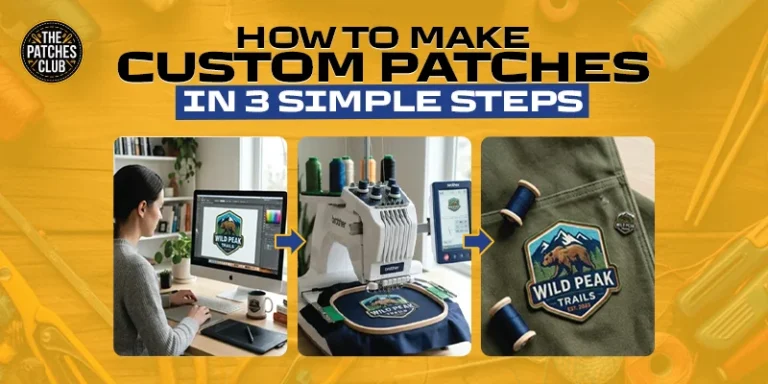
How To Make Custom Patches in 3 Simple Steps
Patches are not merely fragments of fabric. They represent the identity of an individual, the image of a brand, and the philosophy of a team. Patches help clubs, schools, fashion lines, and companies stand out simply.
Best of all, the creation process does not have to be bulky or difficult. Making custom patches can be quick and easy if you know the right steps. Here, we explore how one can create custom patches within just three steps in the UK.
Step 1: Select Your Patch Type
In the initial phase, select the patch style that suits you. Choosing the right patch is key. Each type has its own qualities, like shape, texture, and how it’s applied. With an ideal option, your patch would look perfect. Your patch could contain intricate details, logos, or text. In these cases, a custom embroidered patch is suitable.
This type of patch employs thread stitches on fabric and appears clean and classical. These patches are useful for uniforms, work clothes, and branding. Additionally, at this stage, you must consider the location of your patch. If you apply the patch on the jacket, the material and texture will differ from the cap patch.
Design Your Custom Patches Right Now!
Step 2: Design the Patch Style You Have Chosen
The next step after the selection of the style of the patch involves designing your patch. Here it is important to maintain simplicity as the basis for success. Consider why you need this patch. Is it to promote a name or logo, or to include it in a uniform? Keep the design simple. Too many small details can make it look messy when sewn.
For a bright patch with a unique texture, custom chenille patches are your best option. These patches look great with clean lines, bold shapes, and eye-catching lettering. The choice of the colour shades is a very important part of any patch. Choose colours that match your product’s theme well. Avoid mixing too many different colours. Remember to measure your patch first. This ensures its size and shape match the product you plan to use.
Step 3: Production and Finishing
The final step in your custom patch development is production. You craft your patch using the materials and technique you chose in previous steps. A skilled patch-making service uses top-quality materials and equipment for perfect results.
Custom leather patches are a great choice for durability and a high-quality finish. People know them for this quality, and they fit well with hats, jeans, and other outdoor apparel. In addition, you should decide exactly how you will secure your patch. Iron-on patches are very convenient to use, while sew-on patches will be more durable. Lastly, Velcro might be a suitable solution too.
A good patch maker always quality-checks each patch before sending it to customers. This step ensures your patches look exactly as intended. Furthermore, choosing a reliable provider guarantees quick delivery and clear communication.
Why Custom Patches Are a Smart Choice
Custom patches are easy to make yet quite rewarding. Custom patches help build a brand and create a unique identity. Moreover, custom patches are quite affordable. They come in different quantities; you can buy a few or several.
Therefore, custom patches are great for both small firms and big companies. What’s more, another feature of custom patches is longevity. With proper care, custom patches can keep their look for many years.
Ready to Turn Your Patch Idea into Reality
Creating patches is easy when you follow a step-by-step process. Choosing the right style and designing your patch carefully helps you create a strong, lasting product. When you design your patch, be clear about your purpose, choose high-quality materials, and rely on experts.
When you’re ready to move forward, choose The Patches Club. We deliver the best results quickly. Get in touch with us and receive your free quote.
FAQs
Frequently Asked Questions
Most custom patches are ready in a few days to a couple of weeks. This depends on the design, quantity, and supplier speed.
Yes, many patch companies have low order minimums. This makes it easy for small businesses, teams, or personal projects to get started.
You can usually submit designs in formats like PNG, JPG, PDF, or AI. A clear, high-quality image will ensure the best results.
Yes, high-quality patches are made to last. They can handle regular wear and washing, especially when sewn on properly.
Common backing options include iron-on, sew-on, and Velcro. Each option suits different needs based on how you plan to use the patch.
Yes, custom patches are a smart way to promote your brand on uniforms, merchandise, and promotional items.
The cost depends on size, design, quantity, and patch type. Ordering in bulk usually lowers the price per patch.
You can order from trusted providers like The Patches Club. They offer quality work, quick turnaround, and free quotes.
How to Choose the Best Hat Patch Manufacturer?
A custom hat patch can make a simple cap look professional, stylish, and memorable. Whether you need patches for your…
How to Create Custom Patches From Scratch in 2026?
Have you ever looked at a jacket, backpack, or cap and thought it would look better with a custom patch?…
How Much Do Custom Patches Cost in the UK? A Complete Guide 2026
Custom patches are a low-cost way to promote your brand, show team spirit, or add style to clothing. They are…