
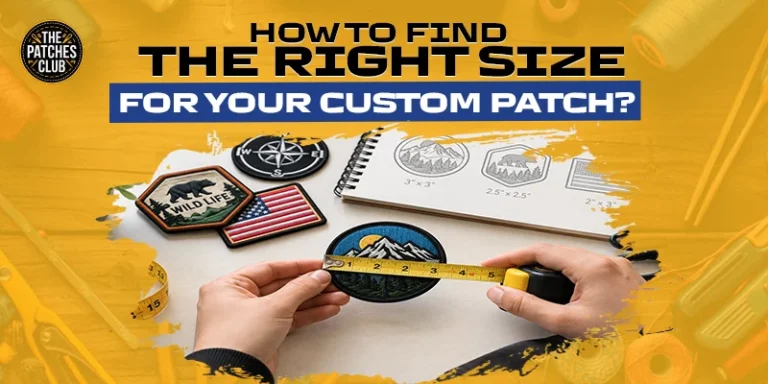
How To Find The Right Size For Your Custom Patch?
A custom patch can make a jacket, uniform, bag or hat look far more personal. But there is one detail you should get right from the start: size. A patch that is too small may make your design hard to see.
One that is too large can look out of place. The right size keeps your artwork clear and helps the patch sit neatly on your chosen item. This guide will help you choose the right size for your custom patch.
Start With Where You Will Use The Patch
First, think about where your patch will go. Different items need different patch sizes. A patch for the back of a jacket can be much larger than one designed for a shirt sleeve.
Chest patches usually need to stay fairly compact. Sleeve patches may need a narrower shape to fit the available space. Caps and hats have less usable space, so smaller patches often work better. Bags can offer more room and give you greater freedom with size. Before ordering, measure the area where you want to attach the patch.
Design Your Custom Patches Right Now!
Measure The Available Space
Take a ruler or measuring tape and check the height and width of the area. Do not measure only the item itself. Measure the actual space where the patch will sit. If you want textured patches with a premium embroidered look, consider custom chenille patches.
For example, if you want a patch on a jacket chest, check the space between seams, pockets and other design details. You do not want the patch to overlap an awkward area.
It is also a good idea to leave a little space around the patch. This helps it look neat and balanced. Once you know the available space, you can choose a patch size that fits comfortably without looking crowded.
Think About The Shape Of Your Patch
Your patch does not always have to be a simple square or rectangle. Round, oval, shield, arch and custom-shaped patches can all work well. The shape of your artwork can help determine the best size. If you want a stylish patch with a classic look, consider custom leather patches.
A wide logo may need a horizontal patch. A tall emblem may look better on a vertical design. For example, a patch measuring 3 × 2 inches has a different visual effect from a 3-inch round patch, even though both may have a similar overall area. When planning your patch, consider the shape of the artwork as well as its measurements.
Consider What Your Design Contains
Your artwork plays a major role in choosing the right patch size. A simple logo with a bold symbol can often work well as a smaller patch. A design with several words, small icons or fine details may need more space. Text is especially important.
If your patch includes a business name, team name or slogan, make sure there is enough room for the letters to remain clear. Trying to fit too much information into a tiny patch can make the design look crowded. In some cases, increasing the patch size or simplifying the artwork can give you a much better result.
Common Custom Patch Sizes
There is no single size that works for every patch. However, some sizes are commonly used for different purposes. Small patches can be around 2 to 3 inches wide. These are useful for hats, small bags, sleeves and simple logos.
Medium patches are often around 3 to 5 inches wide. They can work well on jackets, shirts, uniforms and backpacks. Large patches may be 5 inches or more, depending on the design and placement. These are often suitable for larger jacket areas, club designs and back patches.
These measurements are only a guide. Your ideal size will depend on the available space and the details in your artwork.
Think About Where People Will See It
Ask yourself how close people will normally be when they see your patch. If the patch is being used on a work uniform, people may need to read the company name from a short distance. A patch that is too small could make the text difficult to recognise.
For a sports team, a larger logo may be more useful because it can be seen clearly during games or events. Personal patches can be more flexible. If the design is mainly decorative, you can choose a size based on the overall look you want. The key is to make sure the patch is easy to recognise without taking over the entire item.
Keep Text Easy To Read
Text needs special attention when choosing patch size. If your design contains words, avoid making the patch smaller just to save a little space. Small lettering can lose clarity, especially when embroidered.
Think about the number of words, letter size and font style. Simple, bold fonts are usually easier to read than very thin or highly detailed fonts. If your design contains a lot of text, increasing the patch size may be the better choice. A professional patch maker can also advise you if your artwork needs changes before production.
Consider The Patch Border
The border is another detail that takes up space. Most custom patches have a stitched border around the outside. Your artwork therefore needs to fit inside the border rather than filling the entire measured area.
For instance, if you order a 3-inch patch, the usable design area may be slightly smaller than the full 3 inches. Keeping enough space between the artwork and border helps prevent the design from looking cramped. A good patch should have a clean balance between the artwork, border and background.
Test The Size Before Ordering
One simple way to avoid mistakes is to create a paper version of your patch. Print your design at the size you are considering. Cut it out and place it on the jacket, shirt, hat or bag. Step back and look at it from different distances. Does the patch look too small? Does it cover too much of the area? Can you read the text easily?
This quick test can give you a much better idea of how the finished patch will look. If possible, test two or three different sizes. You may be surprised by how different a small change can look.
Do Not Forget The Material
Patch size should also match the type of patch you want. Custom embroidered patches are popular for clothing, uniforms and clubs. They give designs a classic stitched appearance.
Woven patches can work well when your design includes smaller details or text because they use a flatter weave. Printed patches can be useful for artwork with complex colours, gradients or detailed images. The best option depends on your artwork, use and preferred finish. A patch specialist can help you choose the right type and size together.
Ask For Professional Advice
You do not have to guess if you are unsure about your patch size. A reliable custom patch company can review your artwork and recommend a suitable size based on your design and placement.
At The Patches Club, clear communication and quality should be part of the process from the start. Your patch should look good on screen and work well when produced. Getting advice before production can also help prevent costly mistakes.
Choose Quality Without Making Things Complicated
The right patch size depends on design, placement, readability and appearance. Start by measuring the area where your patch will go. Then check your artwork, shape and level of detail.
Make sure any text is easy to read and leave enough space for a clean border. Still unsure about the right size? Ask for professional advice before placing your order.
At The Patches Club, you can get help with your custom patch requirements, from choosing the right size to preparing your artwork. Ready to create your custom patches? Contact The Patches Club today and get a free quote.

FAQs
Frequently Asked Questions
The best size depends on the patch design, placement area and amount of detail in the artwork.
A 3 to 5-inch patch often works well on jackets, but the ideal size depends on the available space and design.
Small patches around 2 to 3 inches are often suitable for hats because the available space is limited.
Measure the height and width of the area where you want to place the patch before choosing its size.
Yes, but very small text may be difficult to read. A larger patch may be better for detailed wording.
Yes. Round, square and custom-shaped patches can have different space requirements depending on the artwork.
It depends on the production stage. It is best to confirm the size before production starts.
Not always. The patch should be large enough for clear details but still fit naturally on the item.
Medium-sized patches are often suitable for uniforms, but the correct size depends on the placement and logo.
Yes. A professional patch supplier can review your artwork and recommend a suitable size for your intended use.
How to Remove Iron-On Patches: A Comprehensive Guide
Iron-on patches are a simple way to customise jackets, shirts, bags, uniforms, and other items. But what happens when you…
How to Apply Iron On Patches: A Step-by-Step Guide
Want to give an old jacket, bag, or pair of jeans a fresh look? Iron on patches are one of…

10 Best Custom Patch Companies in the UK 2026
Need custom patches in the UK but unsure which company to choose? The right patch maker can turn your logo,…