
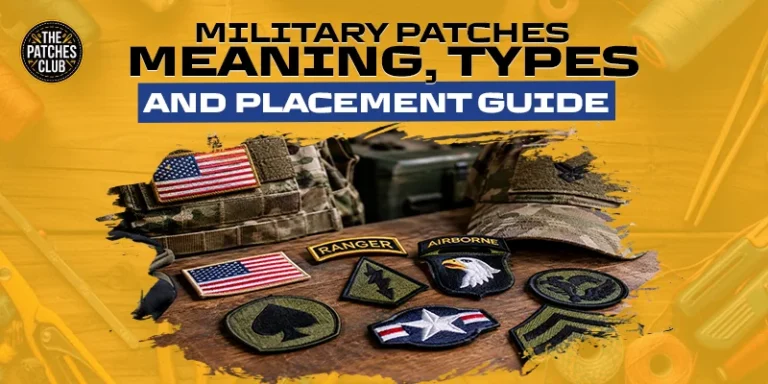
Military Patches: Meaning, Types and Placement Guide
Military patches are more than pieces of fabric sewn onto a uniform. They can show a soldier’s unit, rank, role, country or service history. Each patch can carry a story. From classic embroidered designs to modern PVC patches, military patches come in many styles.
But choosing the right patch is only part of the process. Knowing what it means and where it should go is just as important. This guide explains the main types of military patches, what they represent and how they are usually placed.
What Do Military Patches Mean?
Military patches can have different meanings based on their design and use. Some identify a military unit or division. Others show a person’s role, qualification, or special training. National flag patches can show a person’s country or military service. If you want bold patches for your riding gear, consider custom motorcycle patches for a rugged and personal look.
There are also patches linked to campaigns, missions, and deployments. These can mark a specific period of service or an important military operation. Morale patches are different. They often feature humour, slogans, animals or creative artwork. They can help build a sense of identity and team spirit.
Design Your Custom Patches Right Now!
Common Types of Military Patches
There is no single style that suits every military patch. The right type depends on the design, use and look you want.
Military Embroidered Patches
Embroidered patches are one of the most common choices. They use stitched thread to create the design and offer a classic military appearance. They work well for uniforms, jackets, clubs, and bags. Fine details can also be added, depending on the size of the patch. For a traditional military look, custom embroidered patches are a popular choice.
Military PVC Patches
PVC patches are made from a flexible plastic material. They are known for their strong surface and ability to handle outdoor use. They are also resistant to water and easy to clean. This makes them useful for tactical gear, backpacks, and outdoor clothing. PVC is a good choice when durability is a key concern.
Military Woven Patches
Woven patches use thin threads woven closely together. This gives them a smooth surface and allows small details and text to appear clearly. They are a good option for designs with fine lettering or detailed artwork. Their neat finish also makes them suitable for uniforms and clothing.
Military Morale Patches
Morale patches give military personnel more freedom with their designs. They can include funny phrases, mascots, symbols and creative artwork. Unlike formal identification patches, morale patches are often about personality and team spirit. Many morale patches use hook-and-loop backing, making them easy to remove and replace.
Military Chenille Patches
Chenille patches have a soft, raised texture. They are often linked with bold lettering, logos, and larger designs. While they are not always the first choice for formal military uniforms, they can work well for military-inspired clothing, clubs, teams and personal collections.
Military Leather Patches
Leather patches offer a strong and premium appearance. They can be made with embossed, debossed, or printed designs. They are often used on jackets, caps, bags, and other items. For military-inspired fashion, leather can give the design a distinctive finish.
Military Patch Placement Guide
Patch placement is important, especially when a patch is being used on an official uniform. Military organisations can have their own rules about the size, design, and position of patches. Always follow the relevant uniform regulations when making or wearing official patches. For military-inspired clothing and personal gear, placement is more flexible.
Shoulder Patches
Shoulder patches are commonly used to show a unit, division or formation. They are normally placed on the upper arm. The patch should sit straight and be positioned consistently with the rest of the uniform.
Flag Patches
Flag patches are often placed on the upper sleeve. Their position and orientation can vary depending on the military organisation and uniform rules. For civilian clothing, bags, and tactical gear, flag patches can be placed wherever they look balanced and are easy to see.
Name Patches
Name patches are commonly placed on the chest area of a uniform or garment. They usually contain a surname or other identifying text. For custom clothing, the position can be adjusted based on the garment and its design.
Morale Patch Placement
Custom morale patches are often attached to hook-and-loop areas on uniforms, jackets, bags, and tactical equipment. Because they are usually removable, users can change them for different occasions or activities.
How Are Military Patches Attached?
Military patches can use different backing options. The best choice depends on how often you plan to remove the patch and what item you are attaching it to. Sew-on patches are a reliable option for long-term use. Once stitched properly, they can stay firmly attached to clothing and gear.
Iron-on patches use heat to bond the patch to fabric. They are convenient, but they may not be suitable for every material or heavy-duty use. Hook-and-loop patches are popular for tactical clothing and morale patches. They allow the patch to be removed and replaced easily. Adhesive backing can also be used for temporary applications, although it may not offer the same long-term hold as stitching.
How to Choose the Right Military Patch?
Start with the purpose of the patch. Are you creating a unit-style patch, a morale patch, a flag patch or a military-inspired design? Next, consider the material. Embroidery gives a traditional appearance, while PVC is better suited to wet or demanding environments.
The size also matters. A patch with small text or fine details may need enough space to remain clear and readable. Finally, think about the backing. Sew-on is suitable for permanent use, while hook-and-loop is better when you want to change patches regularly.
Conclusion
Military patches can identify, represent, and bring people together. From unit patches and flag designs to morale patches, each style has its own purpose. The material, size, backing, and placement should all match how the patch will be used.
If you need custom military patches, choosing a reliable patch maker is a good place to start. The Patches Club can help you turn your idea into a quality patch with fast turnaround. Ready to create your design? Get a free quote today.

FAQs
Frequently Asked Questions
Military patches can identify units, roles, countries, qualifications and service history. Some are also used to show team spirit or personal identity.
Embroidered patches are among the most common. They offer a classic stitched appearance and work well on uniforms, jackets and bags.
Morale patches are usually informal designs featuring slogans, humour, symbols or artwork. They are often used to show personality and team spirit.
Common locations include the upper sleeve, shoulder and chest. Exact placement depends on the uniform rules or personal preference.
No. They can also be used on jackets, backpacks, caps, tactical gear and other clothing.
Yes. PVC patches are flexible, water-resistant and easy to clean, making them suitable for many outdoor applications.
Sewing is a good choice for permanent use. It provides a strong attachment and works well for clothing and gear that is used often.
Yes. Custom patches can include text, symbols, logos, colours and other artwork, depending on the intended use.
Hook-and-loop backing is a popular option because it allows morale patches to be removed and changed easily.
You can order custom military patches from a specialist patch maker such as The Patches Club, and get a free quote.
How to Remove Iron-On Patches: A Comprehensive Guide
Iron-on patches are a simple way to customise jackets, shirts, bags, uniforms, and other items. But what happens when you…
How to Apply Iron On Patches: A Step-by-Step Guide
Want to give an old jacket, bag, or pair of jeans a fresh look? Iron on patches are one of…

10 Best Custom Patch Companies in the UK 2026
Need custom patches in the UK but unsure which company to choose? The right patch maker can turn your logo,…